
Source : Complied from various published articles on Pitra Paksha
Shraddh 2015 - September 28th - October 12th
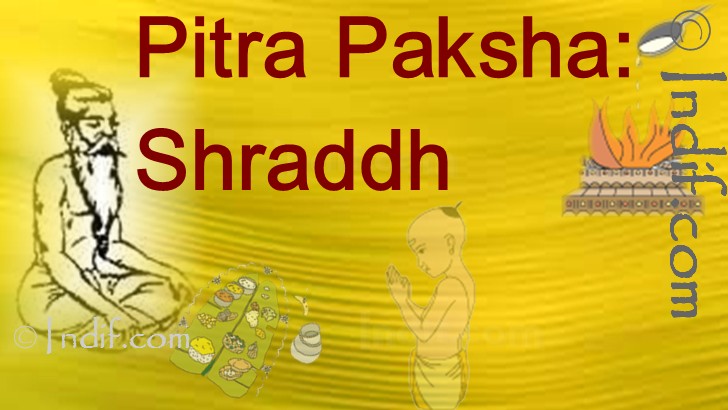
Pitra Paksha (पितृ पक्ष), also known as Mahalay, is a period of fifteen days. It is the time designated to give devotion or to offer respect to the dead and departed ancestors of the family. These Fifteen days are called " Pitra Paksha", or most popularly known as "Shraddh" days. They are also called by the name of "Kanagat." The dark half of Ashvina (September-October) is observed as Pitra Paksha throughout the Hindu world. The elder son or grandsons of the family performs shraddh in honor of the dead and offers respectful homage, during this period. It is believed that only after performance of Shraddh ritual, the soul of the deceased relative attains moksha.
Shraddh is a Sanskrit word which literally means "anything done with sincerity and faith." "Shraddh" also means "Shraddha" which means unconditional reverence. Shraddh is performed every year on the death anniversary of the deceased relative as per the Panchang (The Hindu calendar)or during this period of dark fortnight called Pitra Paksha.
The family remembers the death tithi or date, as per Hindu calendar of their ancestors and performs rituals on the same tithi of the dark fortnight of Pitra Paksha. Bhramins are fed and given dhan-dakhina, for it is believed that whatever is given to the Brahmins also reach the departed souls. People also donate clothes and other items to Brahmins and relatives. Shraddh is usually performed for three generations of Pitris (the father, the grand-father and the great grand-father). A unique element of this fundamental ritual offerings of Shradha is performed to the ancestors. Meditation, mantra repetition and prayer also form part of Pitra Paksha. It is considered auspicious to make offerings to the poor on this occasion.
Shraddh Rituals :
The following rituals are performed during the Shraddh pooja-
- Should prepare pure vegetarian food, including the favorite food of your ancestor. This food is offered to the Brahmins or Pandits. The food should be offered to the Brahmin first, after that the family should have their meal.
- Offer prayers for the peace of souls of ancestors.
- Should offer the food to the crow, cow and dogs.
- For the peace of the soul of your ancestors, should feed poor or needy.
- Should perform Pind daan, the ritual of offering of rice, sesame seeds and made with barley flour balls.
Do's and Don'ts during Shraddh :
During the period of Shraddh, traditionally people do not buy or wear new clothes, and don't get a hair-cut. The day they perform the ritual, male members of the family do not even shave. Women do not wash their hair on that particular day. Auspicious works like marriage, settling marriage, any kind of birth ceremony, settling down in a new home, starting a new business etc. are prohibited during this period. Eating non vegetarian food or even including onion and garlic in the food is forbidden.
Food that is specially prepared for the event is offered in memory of one`s ancestors. A crow, which is considered the messenger of Yama, eating the food, is considered an auspicious sign. Reading Holy Scriptures such as Garuda Purana, Agni Purana and the stories of Nachiketa and Ganga Avataram is considered propitious during this time.
Types of Shraddh :
There are 12 types of Shraddh in the Hindu religion.
1. Nitya Shraddh
2. Neimitik Shraddh
3. Kaamya Shraddh
4. Vriddhi Shraddh
5. Sapindan Shraddh
6. Paarvann Shraddh
7. Goshtth Shraddh
8. Shurdhyarth Shraddh
9. Karmaang Shraddh
10. Deivik Shraddh
11. Oupcharik Shraddh
12. Saanvatsarik Shraddh
To conclude, this is one of the most important and noble ceremony or ritual of the Hindu religion, it is necessary that the performer of this ritual understands the importance of it. Only then the true aim of the ritual will be fulfilled. It is also believed that if Shraddh is performed with whole devotion, the ancestors bless and that house always prospers.
 Collection of Hindu Vrat and Upavas Kathas