
Introduction Maha Mrityunjaya Mantra
The great mantra dedicated to Shiva as Mrityunjaya is found in the Rig Veda. It is called the Maha Mrityunjaya mantra, the Great Death-Conquering mantra. It is a mantra that has many names and forms. It is called the Rudra mantra, referring to the furious aspect of Shiva; the Tryambakam mantra, alluding to Shiva's three eyes; and its is sometimes known as the Mrita-Sanjivini mantra because it is a component of the "life-restoring" practice given to the primordial sage Shukra after he had completed an exhausting period of austerity. The Maha Mrityunjaya mantra is hailed by the sages as the heart of the Veda. Along with the Gayatri mantra it holds the highest place among the many mantras used for contemplation and meditation.
The Maha Mrityunjaya Mantra
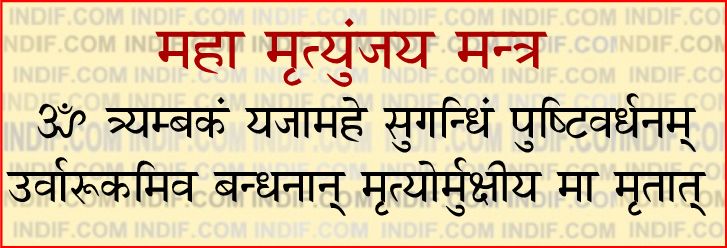
Om Tryambakam Yajaamahe
Sugandhim Pushtti-Vardhanam
UrvaarukamIva Bandhanaan
Mrtyor-Mukssiiya Maamrtaat
Meaning of Maha Mrityunjaya Mantra:
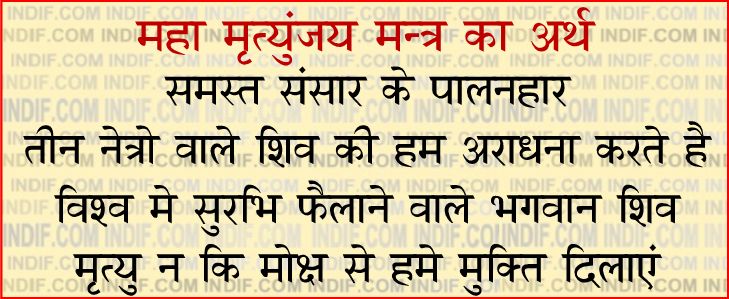
OM. We worship and adore you, O three-eyed one, O Shiva.
You are sweet gladness, the fragrance of life, who nourishes us,
restores our health, and causes us to thrive.
As, in due time, the stem of the cucumber weakens,
and the gourd if freed from the vine, so free us
from attachment and death, and do not withhold immortality.
Word to Word Meaning of Maha Mrityunjaya Mantra
| OM | Almighty God |
| Tryambakam | three-eyed |
| Yajamahe | We worship, adore, honor, revere |
| Sugandhim | sweet fragrance |
| Pushti | A well-nourished condition, thriving, prosperous, full, and complete |
| Vardhanam | One who nourishes, strengthens, causes to increase (in health, wealth, well-being); who gladdens, exhilarates, and restores health; a good gardener |
| Urvarukam | disease, attachment, obstacles in life, and resulting depression |
| Iva | Like, just as |
| Bandhanan | Stem (of the gourd); but more generally, unhealthy attachment |
| Mrityor | From death |
| Mukshiya | Free us, liberate us |
| Ma | not |
| Amritat | Immortality, emancipation |