
Dussehra or Vijaya Dashami is an important Hindu festival. It is celebrated by Indians every year in the Hindu Vikrami Calender month of Ashwin (September / October).
This is also the festival marking end of Navratri and the immersion of Durga idols which are worshipped for nine days prior to Dussehra. Dussehra is also the day when many families start formal education of their kids. The practise has been so old, that in some parts of Kerala, even after conversions to Christianity, some members of the community continued this tradition.
Mythological Significance:
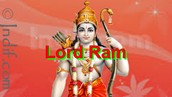
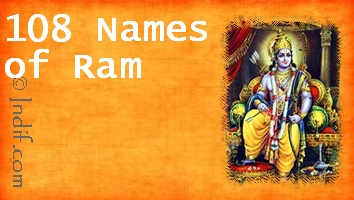
This day marks the triumph of Lord Rama over Demon king Ravana. On this day, Rama killed Ravana and freed his wife Sita after leading an army of monkeys. Sita was taken by Ravana from Ramas Ashram to avenge the insult of his sister Shoorpanakha who had proposed to marry Ram (or Lakshman) but got her nose cut off by Lakshman when she tried to hurt Sita. As per Ramayan, Ram did Chandi-Puja and invoked the blessings of Durga to kill Ravana. The war against Ravan lasted for ten days. Sita had been returned to her husband Ram and they now make their way to Ayodhya in triumph and glory. Thus, it is on the Diwali day that Lord Ram, the incarnation of Lord Vishnu in the Treta Yug, returned to his capital Ayodhya after the exile of fourteen years.
Belief and Rituals:
Dussehra day is considered a most auspicious day. It is a time-honored belief that if any new venture is started on this day, it brings success. Hence, all the undertakings be it laying-in of foundation of a new building, opening of a new commercial establishment or even initiating a child into the world of learning- are started on this day. Houses and shops are decorated with flower studded strings called 'Torans' (Floral Gateways) Also on this day vehicles, machineries, books, weapons & also tools are worshipped.
Celebrations:
Local customs inevitably colour the forms and interpretation that the festival receives regionally, but Rama's victory is always the centrepiece of the celebrations. On this day, the effigies of Ravana, Kumbhakaran and Meghanad are burnt; which are stuffed with crackers. In burning these effigies the people are asked to burn the evil within them, and thus follow the path of virtue and goodness. Especially children enjoy seeing this because of the beautiful fireworks on the ground. The festival which is thought as the "Victory of Good over Evil" & "Return of God from Exile".
In Himachal Pradesh, it is famous as "Kullu Dussehra", a week long fair in the hill town of Kullu, is a part of the Dussehra celebrations. From the little temples in the hills, deities are brought in procession to the 'maidan' in Kullu, to pay homage to the reigning deity, Raghunathji.
In Southern India - Tamil Nadu, Andhra Pradesh and Karnataka, families arrange dolls (Bommai Kolu) on artificially constructed steps and prepare an elaborate spread of lamps and flowers. Women traditionally exchange gifts of coconuts, clothes and sweets. They sing songs, tell stories that the dolls might depict and eat a dish made out of chickpeas (choondal). The whole set up is put up on the very first day of Navaratri. After the Saraswati pooja on the ninth day, the whole set up is taken down on Vijayadashmi. Vijayadashami is an auspicious occasion for children to commence their education in classical dance and music, and to pay homage to their teachers.
In Western India, especially in Gujarat, the evenings and nights are occasions for the fascinating Garba dance. The women dance around an earthen lamp while singing devotional songs accompanied by rhythmic clapping of hands.
In northern India, the festival wears the colourful garb of Ramlila wherein various incidents from Rama's life are enacted, as is the destruction of Ravana and Bharat Milap, that is the reunion of Ram and his estranged brother Bharat, on the former's return to Ayodhya after 14 years of exile. People also doing fasting during the nine days of Navratri.
In Bengal, the festival is celebrated as Kali Puja or Durga Puja .The vibrant festivities last for ten days, of which nine nights are spent in worship, 'Navaratri'. The tenth day is devoted to the worship of goddess Durga. Beautiful idols of the Mother Goddess are worshipped in elaborate pandals for nine days, and on the ninth day, these are carried out in procession for immersion (visarjan) in a river or pond.