
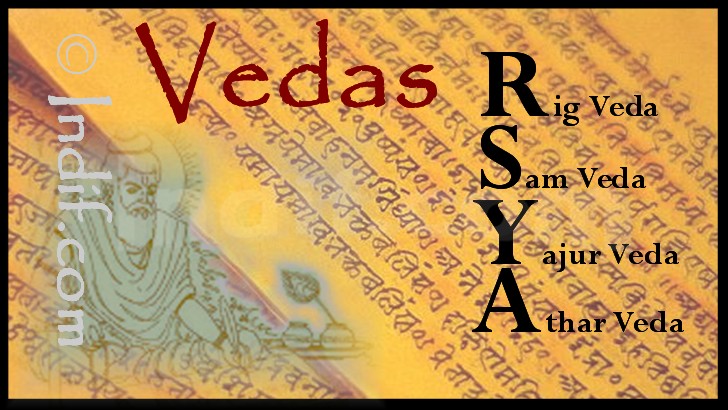
Veda means knowledge. The word comes from the Sanskrit language and is derived from the verb root vid, 'to know'. The Vedas are considered the earliest literary record of Indo-Aryan civilization, and the most sacred books of India.
The Veda contain hymns, rituals, and mantras.
The four Vedas Rigveda, Yajurveda, Samaveda and Atharvaveda are divided into four sections:Vastu which is Sanskrit for dwelling, is a science of directions and it accounts for 8 directions-
- Samhitas: Mantras and Hymns
- Brahmanas: Rituals
- Aranyakas: Meditations
- Upanishads: Philosophy, known as Vedanta, or the end of the Vedas
Vedanga (Ved = knowledge, anga = part) are the disciplines necessary to read and understand the Vedas fully. These are six in number:
- Siksha, i.e. pronunciation and phonetics;
- Chhanda, i.e. metre;
- Vyakarana, i.e. grammar (Panini's rules and views);
- Nirukta, i.e. etymology (Yaska's writings);
- Jyotisha, i.e. astronomy;
- Kalpa, i.e. rules for sacrifices and ceremonies in accordance with the Vedas. Also known as Kalpa-sutras or Sautra-sutras.
The Vedas are also divided into two parts, namely,
the Karmakanda and the Jnanakanda. Karmakanda deals with
rituals and sacrifices whereas Jnanakanda deals with the
Vedanta philosophy. For thousands of years only
Karmakanda was more popular as the real Veda. Vedanta
part of the Vedas was meant only for the sanyasins
(monks). It was Shri Shankaracharya who wrote Bhashyas
(commentaries) on a few selected Upanishads, called the
Principal Upanishads, and made their studies popular.
In Vedas, the 11 sections of Sri Rudram are considered the most sacred. Sri Rudram occurs in Krishna Yajur Veda. There are seven chapters in this Veda and Sri Rudram occurs in the fourth or middle chapter. There are two important and well known Mantras in Sri Rudram. Panchakshari Mantra and Mrithunjaya Mantra. The Panchakshari mantra is also known as Sharanagati mantra. Sharanagati means surrender to the Lord.
Keywords:
| Atma | Soul |
| Mana | Mind |
| Paramatma | Purest form of the Atma |
| Avatars | Manifestation of God in a physical form |
| Satwik | karma Deeds |
| Bramhanda | Universe |
| Brahmana | Priest |
| Guru | Teacher |
| Srishti | Nature |
| Dharma | Religion |
| Vyakarana | Grammar |
| Netra | Eyes |
| Panch Tatwa | The five elemental forms of existence |
Upavedas: Secondary Knowledge
Medicine (Ayur
Veda), associated with the Rigveda
Archery (Dhanur
Veda), associated with the Yajurveda
Music and Dance
(Gandharva Veda), associated with the Samaveda
Military science (Shastrashastra), associated with the
Atharvaveda
Vastu also have spiritual benefits like it awakens
the urge for understanding the meaning of life and
death; evokes the quest for touching something more deep
within and without; helps in problem solving ability and
power to make right decision; and promotes happiness and
healthier frame of mind.
Truth can not be suppressed and always is the ultimate victor.
- the Yajur VedaOne should, perform karma with nonchalance
without expecting the benefits because
sooner of later one shall definitely gets the fruits.
-Rig VedaThrough all this world strode Vishnu:
thrice his foot he planted,
and the whole world was gathered in his footsteps.
Vishnu, the guardian,
he whom none deceiveth,
made three steps and established his laws.
- the Sama Veda (8:2:5)One should, perform karma with nonchalance
without expecting the benefits because
sooner of later one shall definitely gets the fruits.
- the Rig VedaDo not be led by others, awaken your own mind, amass your own experience, and decide for yourself your own path.
- the Athar Veda
You might also like:

Republic Day (26th January)- India's great national festival.

Independence Day (15th August)- National Holiday in India commemorating the nation's independence.
Gandhi Jayanti (2nd October)- The birth anniversary of the father of the nation, with reverence all over the country.

Children's Day (14th November)- Children's day in India is celebrated on Pandit Nehru's birthday.


