
Karva Chauth is a festival of married Hindu women. The word 'Karwa' means an earthen pot with a spout, which is used in prayers. 'Chauth' means the fourth day and hence the name 'Karva Chauth'. It is a traditional fast undertaken by married Hindu women who offer prayers seeking the welfare, prosperity, well-being, and longevity of their husbands. Karwa Chauth falls about nine days before diwali on the Kartik Chauth some time in October or November. It is the most important fast observed by the women of North India. Fast of Karwa Chauth is quite tough as women are supposed to go without food or water for the entire day.
The Legends of Karwa Chauth :
Queen Veeravati - Long time ago, there lived a beautiful girl by the name of Veeravati. She was the only sister of her seven loving brothers, who was married to a king. On the occasion of the first Karva Chauth after her marriage, she went to her parents' house. After sunrise, she observed a strict fast. However, the queen couldn't stand the rigors of fasting and was desperately waiting for the moon to rise. The seven brothers, who loved her dearly, were very disturbed watching the distress of their sister and decided to end her fast by deceiving her. Then the brothers reflected a mirror through Pipal tree leaves. The sister, taken it as moonrise, broke the fast and took food. However, the moment the queen ate her dinner, she received the news that her husband, the king, was seriously ill. She did not keep the fast properly. When Veeravati begged forgiveness, Goddess Parvati granted that her husband would revive only when she completes her fast under strict conditions. The queen observed the fast and thus revived the life of her husband.
Satyavan and Savitri - Another story id of the Satyavan and Savitri. Once Yamraj - the God of Death came to take Satyavan's life. Savitri - the devoted wife of Satyavan pleaded for her husbands life which Yamraj refused. Savitri went on a fast and refused to eat or drink. Looking at her devotion, Yamraj was forced to grant life to Satyavan. Since then women started keeping fast for their husband's long life.
Mahabarata - Draupadi, too, is said to have observed this fast. Once Arjun went to the Niligiris for penance and the rest of the Pandavas faced many problems in his absence. Draupadi, out of desperation, remembered Lord Krishna and asked for help. Lord Krishna reminded her that on an earlier occasion, when Goddess Parvati had sought Lord Shivas guidance under similar circumstances, she had been advised to observe the fast of Karva Chauth. Draupadi followed the instructions and observed the fast with all its rituals. Consequently, the Pandavas were able to overcome their problems. On this day, fasting women listen to Karva Chauth legends with rapt attention.
The Karwa Chauth Rituals and Festivities:
On the day of Karva Chauth married women wake up before dawn. They take bath and invoke blessings of Goddess Parvati for their husband's long life. Women are then given a sumptuous meal called 'Sargi' by mother-in-law to eat before sunrise, as the fast starts before sunrise and ends only after worshiping the moon at night. It is a tough fast, as after the Sargi women are not supposed to take any form of food or liquid. In the day, the married woman receives the baya or a basket full of goodies from her mother, which is meant for the mother-in-law. The most joyous part of Karwa Chauth is the Puja held in the evening. A large number of elegantly dressed women gather in a temple or in somebody's house for Puja. Women pray to Goddess Parvati or Gauri Ma for the well being and long life of their husbands. The fast is broken once the moon is sighted and special rituals and prayers marking the day have been offered. At night when the moon appears, women break their fast after offering water to the moon.
The Karwa Chauth Puja and Celebrations :
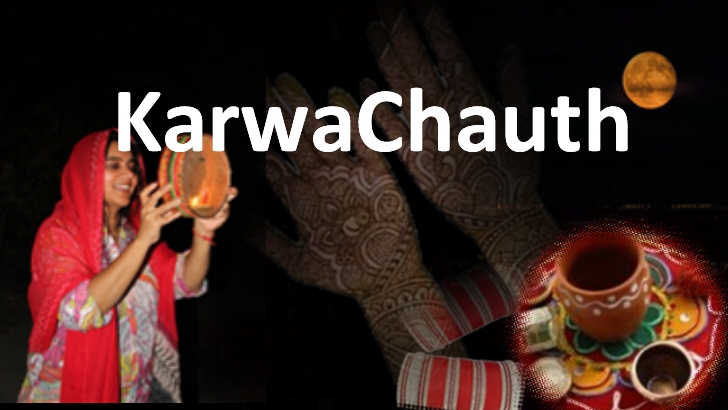
A Day Before: The pooja preparations start a day in advance. There is huge excitement a day before the festival as women make elaborate preparations to dress up elaborately for the occasion. The Married women buy bangles, bindis, apply mehndi (Hena tattos)on their hand and feets.
Beginning of the Day: Early in the morning they prepare food and have it before sunrise. The morning passes by in other festive activities like decorating hand and feet with heena, decorating the pooja thali and meeting friends and relatives.
The Puja : In the evening, women dress up in special clothes, usually a red or pink sari or 'lehenga-choli' with gold woven 'zari' patterns. New brides often wear their bridal costume. All deck up in jewelry. Decorative 'bindis' on the forehead are a must for all women taking part in this celebration. Fasting women from all over the neighborhood gather in a group and narrate the story of Karwa Chauth that underscore the significance of Karwa Chauth and sing the Karwachauth song while rotating the thalis containing Baya.
Once the moon rises, the women see its reflection in a thali of water, or through a dupatta or a sieve. They offer water to the moon and seek blessings. They pray for the safety, prosperity and long life of their husbands and sing a Karwachauth ark song. She is then given a piece of sweet and sip of water by her husband. Hands over the Baya to the monther-in-law or any elderly lady of the household and seeks the blessings. Then comes the much awaited sumptuous dinner. This marks the end of a day long fast.